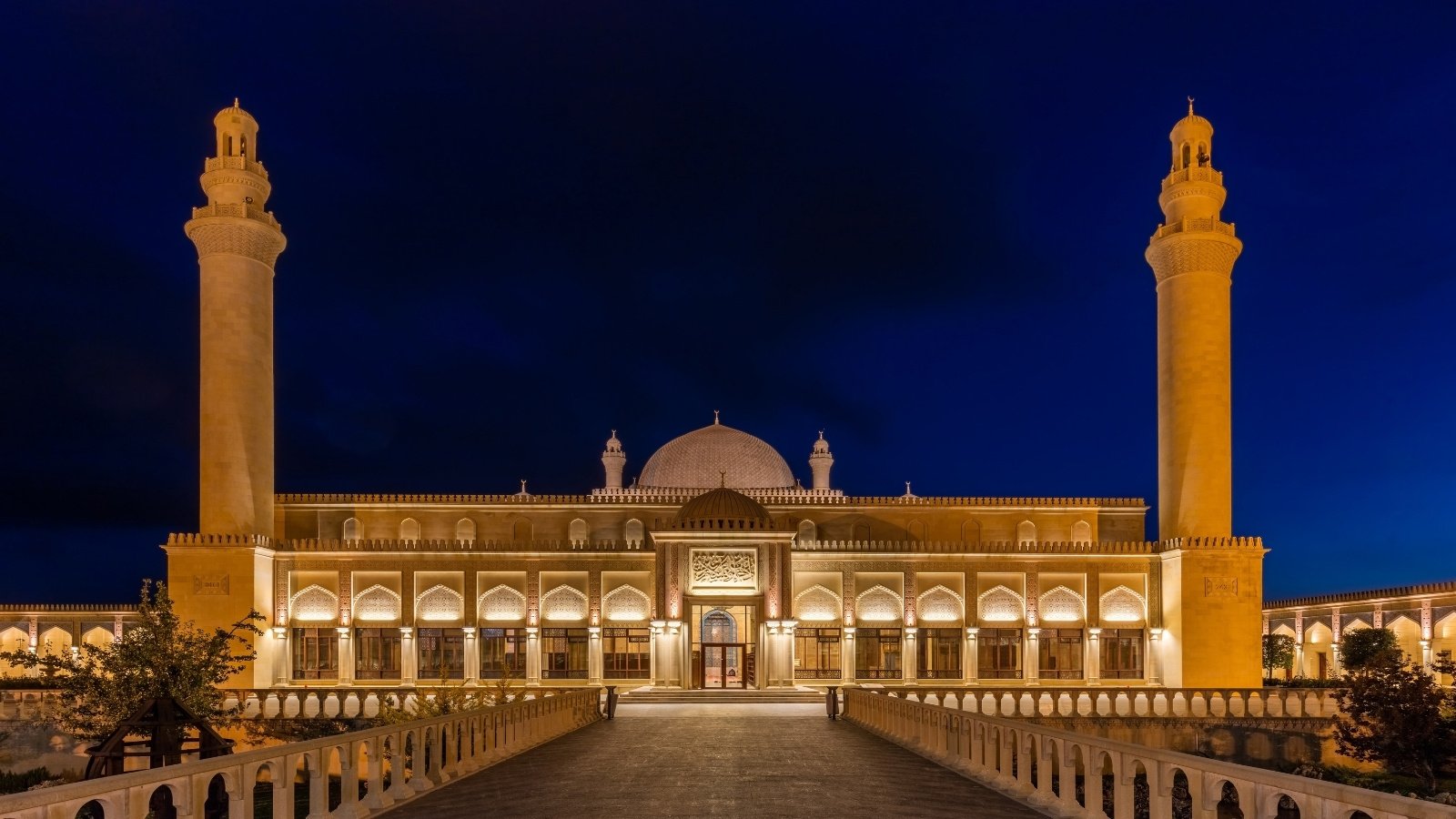
Some places don't just survive in history books — they stay part of daily life for centuries. Juma Mosque Shamakhi is one of them: built in 743 AD, it is still an active place of worship today. It holds the title of oldest mosque in Azerbaijan — and, since the only older mosque in the wider Caucasus lies further north in Dagestan, it's also the first mosque in the South Caucasus.
An Inscription Found by Chance
For a long time, historians could only guess the exact building date. The answer came from a lucky discovery: in 1902, engineer Shah-Kuli-Mirza Gajar came to Shamakhi to study earthquake damage — and found an Arabic inscription on the mosque wall showing the year 126 of the Hijri calendar. Converted to the Gregorian calendar, this gives 743–744 AD. The mosque is linked to Abu Muslim, a military leader and administrator of the Caliphate, who built it as a sign of the new religion in lands recently brought under Arab rule.
Built in the Shirvan Style
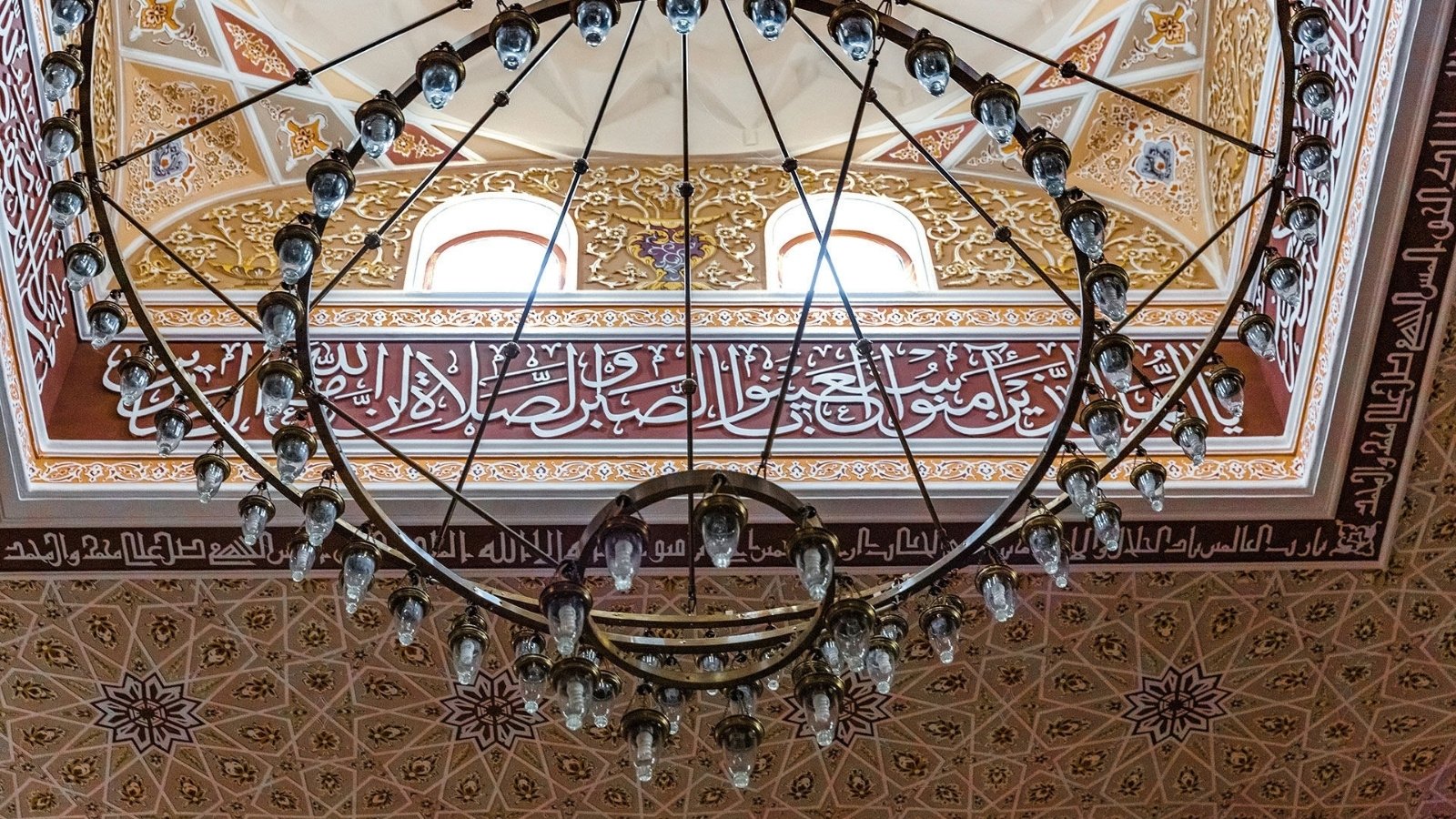
Architecturally, the mosque belongs to the Shirvan school — one of the key traditions of Islamic architecture in the Caucasus. Inside, the space is split into three halls, a practical choice for a Friday mosque that needs to hold many worshippers at once. The columns holding up the roof are like layers of history themselves: some date back to the 8th century, others were replaced during later repairs, yet together they form one unified structure.
More Damage Than Most Buildings Could Survive
The mosque's story is, in many ways, a story of starting over. Earthquakes hit the building again and again, with the worst damage coming in 1859. But natural disasters weren't the hardest part. In 1918, during ethnic conflict in the region, the mosque became the site of tragedy: local residents sheltered inside hoping for safety, but attackers set the building on fire, killing around 1,700 people. It remains one of the most painful chapters in the city's history — yet the mosque was rebuilt once again.
A 21st-Century Restoration
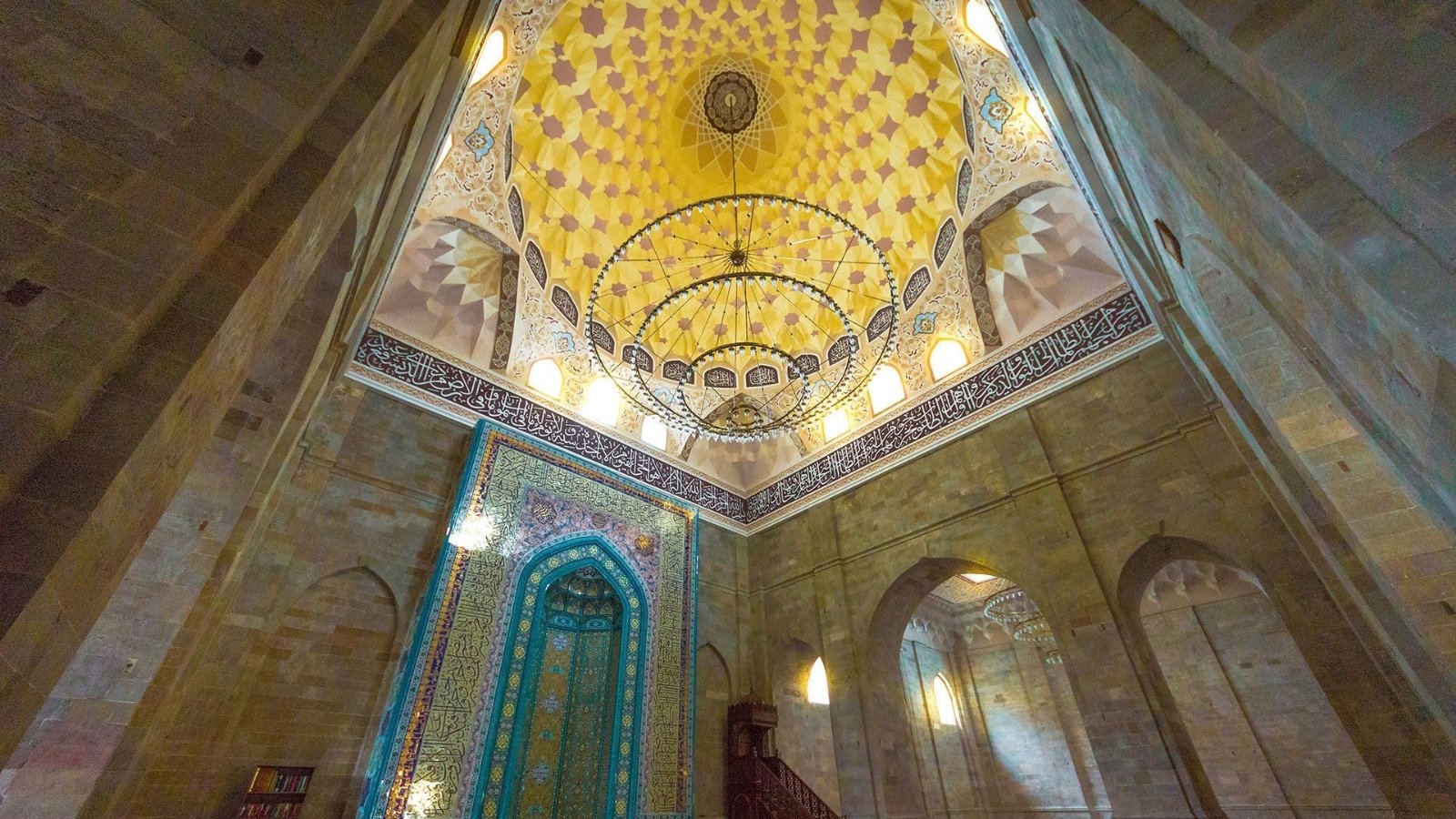
By the early 2000s, the building needed serious repair once more. In 2001, it was officially recognized as a national architectural monument. A turning point came in 2009, when President Ilham Aliyev visited the site and ordered a full restoration. Work began in 2010, based on surviving drawings and archaeological research — the goal was not to modernize the mosque, but to bring back its original appearance. The restoration was completed in 2013.
Not a Museum Piece — A Living Mosque
It's worth remembering: this isn't an exhibit behind glass. Every Friday, the mosque still holds Jumu'ah prayer — the very gathering that gave it its name. People coming here today are continuing a tradition that has never stopped for nearly thirteen centuries.
How to Get There
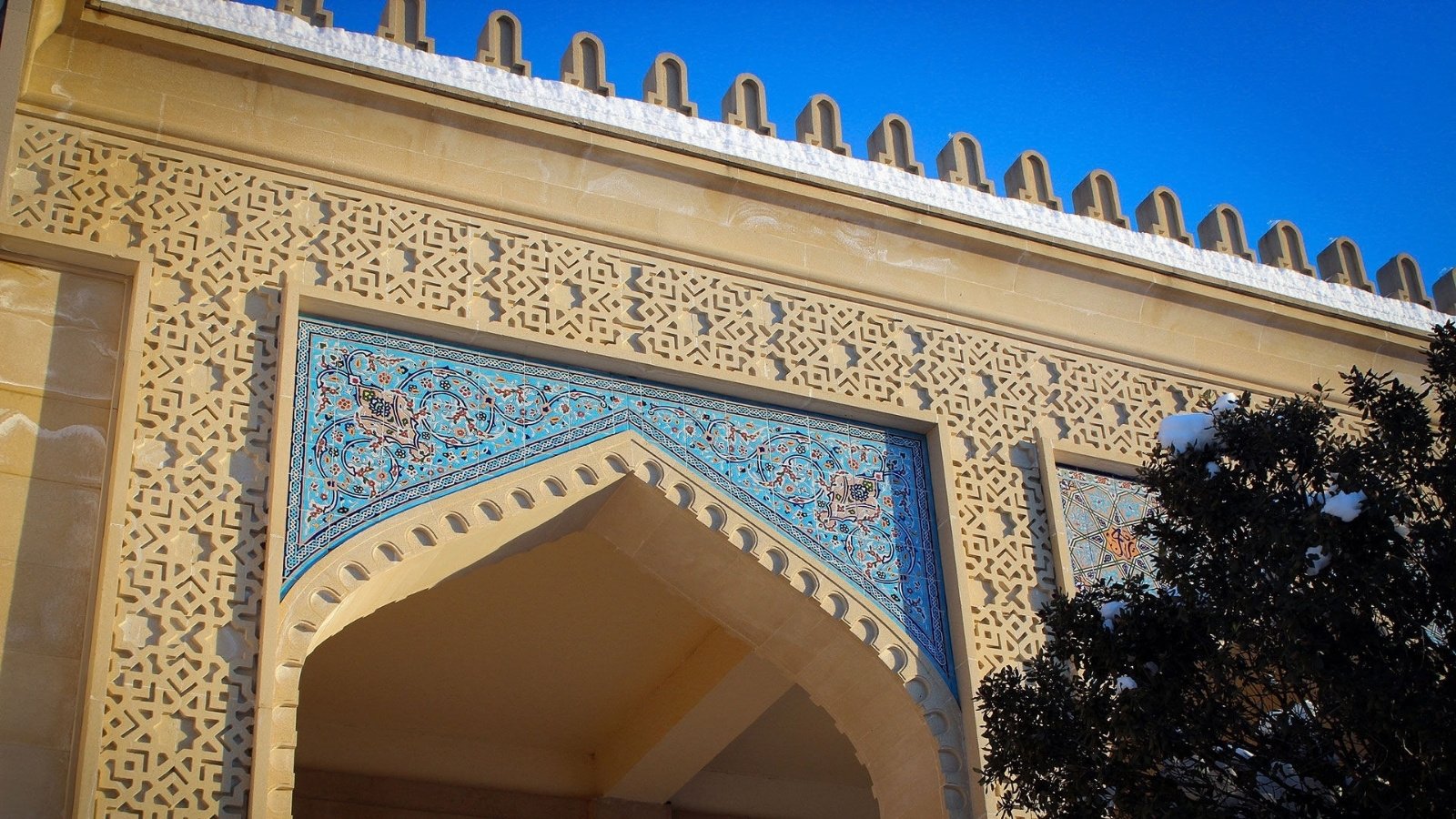
Driving to Shamakhi on your own is possible, but the easiest way is a bus tour from Baku: the drive takes about two hours, and the guide shares the region's history along the way, so the journey itself becomes part of the experience. A Shamakhi city tour usually takes about as long as the drive there — guides give plenty of time at the mosque itself, enough to look around slowly and hear its full story.
Juma Mosque lets you see what Caucasus architecture looked like over a thousand years ago, and feel history's continuity first-hand — a good reason to choose a group tour Azerbaijan trip instead of sticking only to the capital.
You can see Juma Mosque on two of our routes:
- Shamakhi — Gabala — a one-day trip where the mosque is the first stop before exploring Gabala's nature.
- Gabala and Sheki in Two Days — for travelers who want to extend the trip and also see the Khans' Palace in Sheki.
Right now, you can buy tour with discount on both routes — check the booking page for the current price.
Comments (0)
Leave a Comment