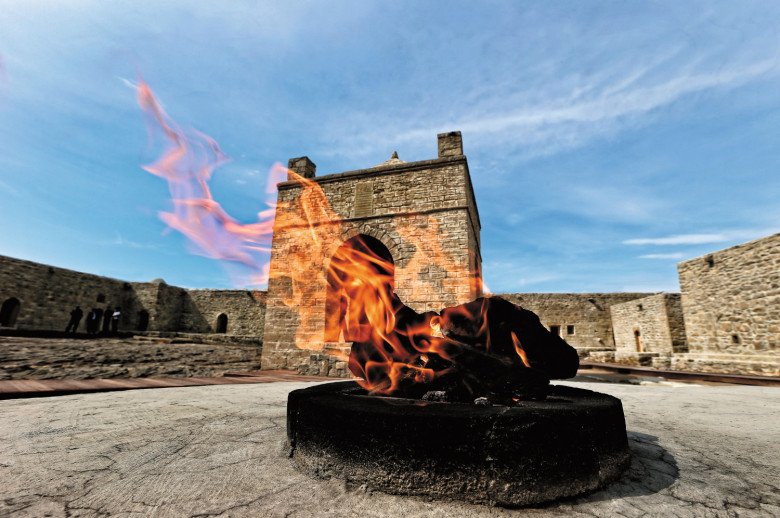
On the Absheron Peninsula, just a short drive from Baku, there's a place that's hard to explain with normal travel logic — you feel it more than you explain it. A five-sided stone courtyard, seven flames burning in the center, and a silence that feels almost heavy. This is Ateshgah, a temple that helped build Azerbaijan's reputation as the "Land of Fire."
Land That Burns on Its Own
Long before any buildings stood here, the Absheron Peninsula was already known for something strange: gas coming up from underground, catching fire, and burning without stop, with no fuel added. For ancient people, who didn't know the word "methane," this looked like a miracle — a sign of something divine right under their feet.
News of this spread far beyond the region. Zoroastrians came from Persia, and Hindus and Sikhs came from India — each group saw the eternal flame as proof of their own beliefs. Over time, this natural event turned into a real spiritual center, bringing together several religious traditions in one place.
Courtyard, Cells, and Altar: How the Temple Is Built
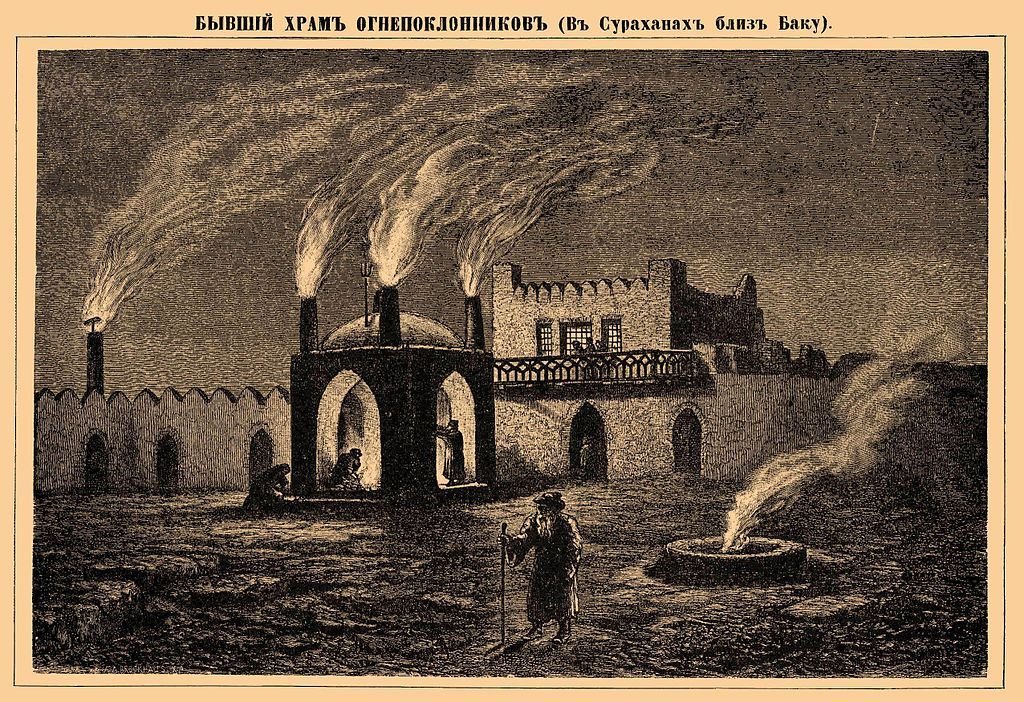
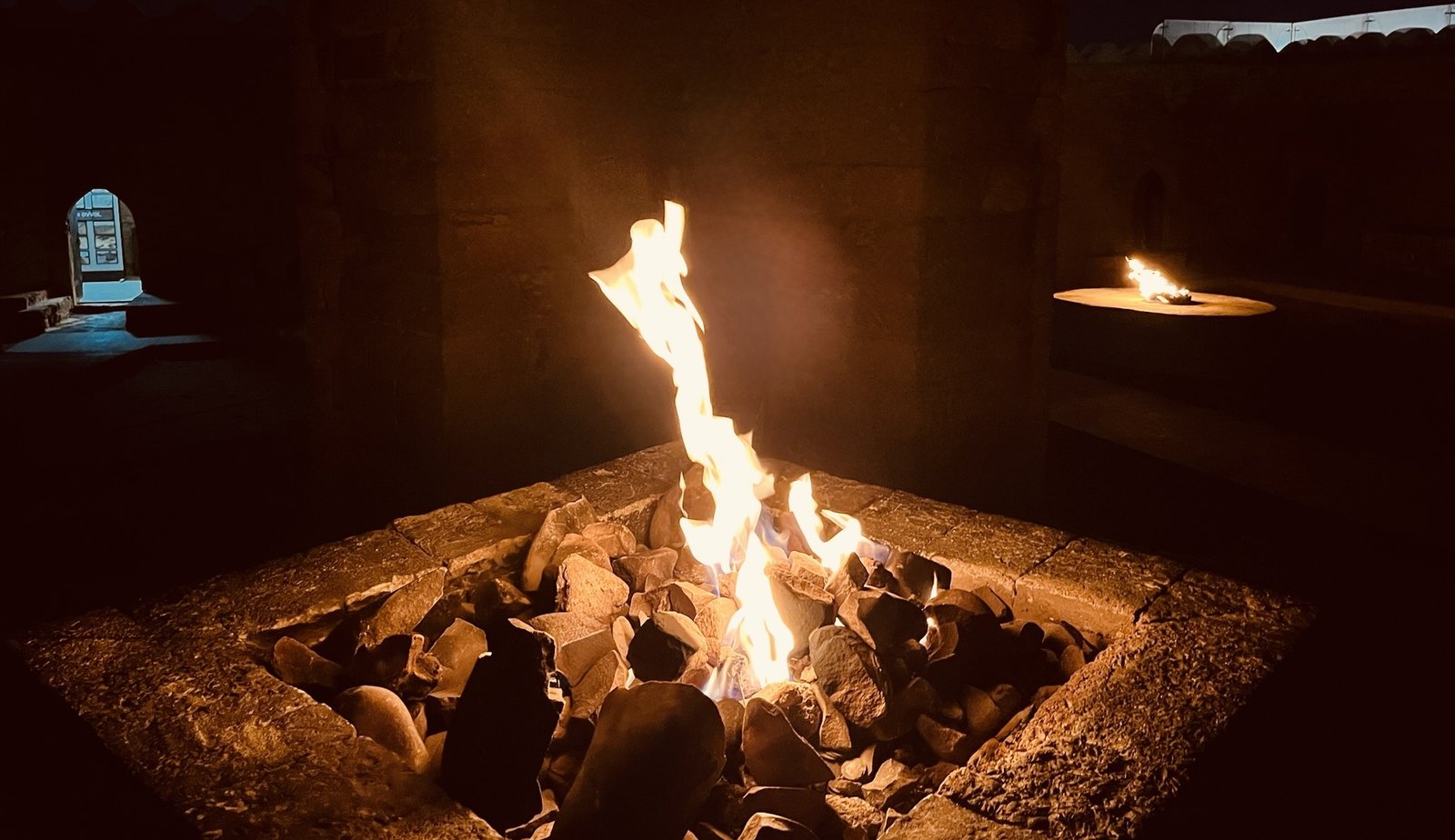
The architecture of Ateshgah mixes different cultures in stone. The complex is built as a closed five-sided courtyard, with thick walls protecting the inner space from the outside world. In the center stands a four-sided altar, where gas pipes meet to create seven flames burning at once.
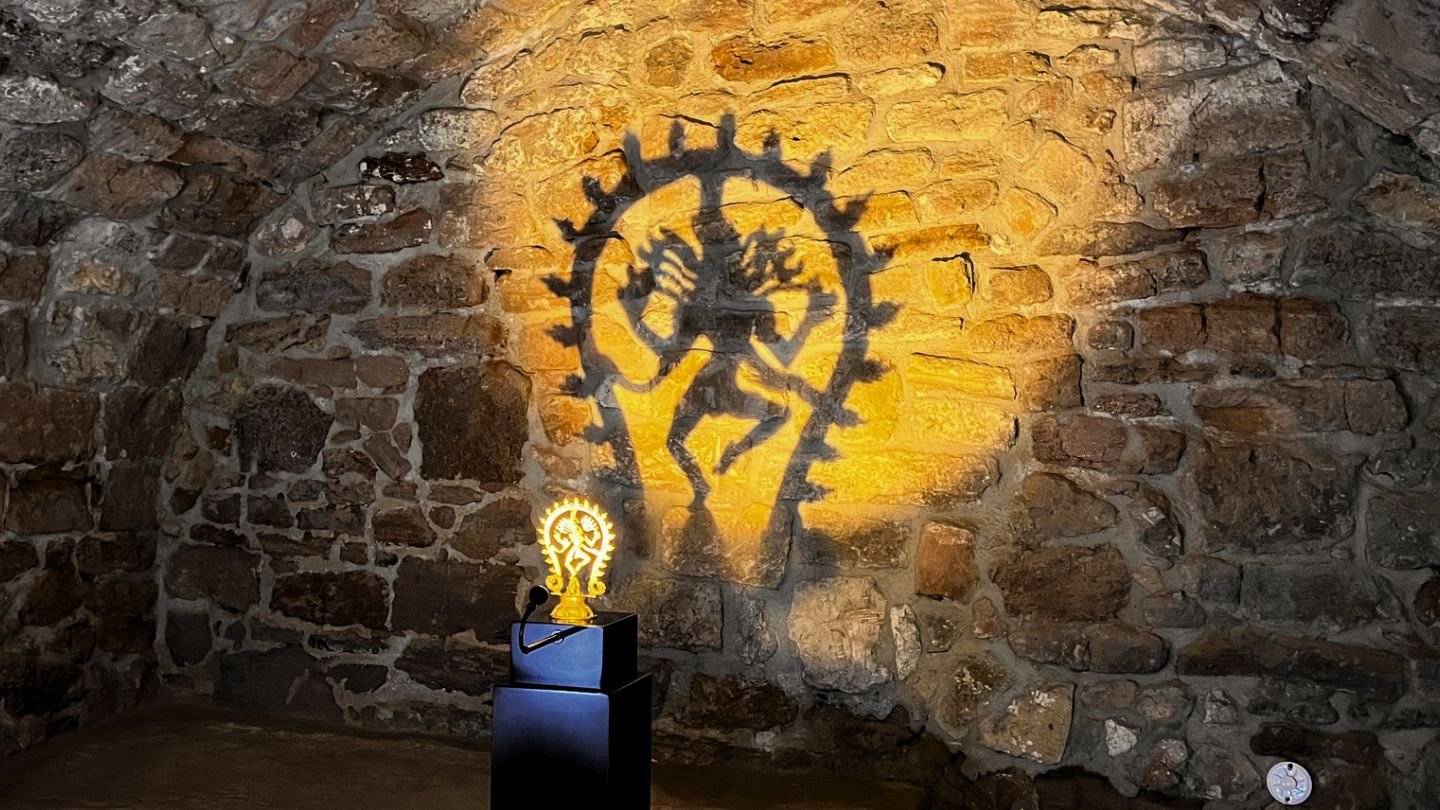
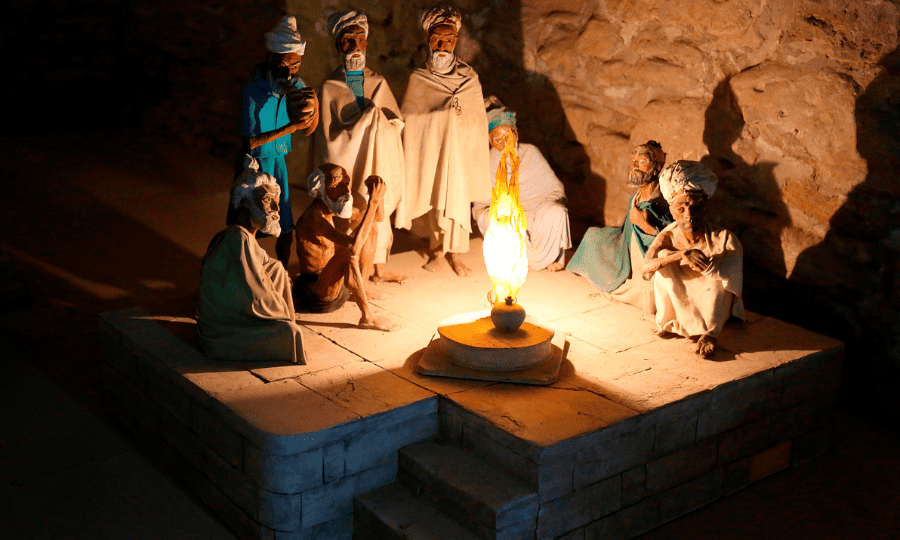
Around the courtyard are 26 small cells, once home to monks who came here not for wealth, but for solitude. Life was hard: small stone rooms, few comforts, and full focus on spiritual practice. Today, some of these cells hold museum displays with figures showing what daily life was like for these hermits, and you can still see original writing on the walls in Sanskrit and Persian.
A Meeting Point of Faith and Trade
The location worked in the temple's favor — the Silk Road passed nearby, and Ateshgah quickly became more than just a holy site; it turned into a busy stop for merchants. Traveling between East and West was dangerous back then — six months on the road, full of unknown risks. Merchants, even ones who weren't very religious in daily life, came here looking for protection, believing the hermits' prayers would be heard faster than their own.
Everyone gained something from this: pilgrims received generous donations, merchants found peace of mind before a long journey, and the temple itself grew larger thanks to this steady flow of people and money.
Why It's Worth Seeing in Person
Ateshgah is a rare case where a natural event actually created a philosophy and a religious practice. You can feel the layers of different cultures here — Caucasian, Persian, Indian — and that feeling is hard to capture in a photo. You really need to experience it yourself.
An Ateshgah Fire Temple tour is usually combined with a visit to the burning hill of Yanar Dag — together, they give a full picture of how natural fire on the Absheron Peninsula shaped local beliefs and legends for centuries.
Getting There and What's Nearby
You can drive to Ateshgah on your own, but it's easier and more informative to take an Ateshgah tour with a guide, who can explain the history of Zoroastrianism, the old trade routes, and local legends along the way. These trips are often organized as Guided Tours Baku and combine well with other sights on the Absheron Peninsula — mud volcanoes, the Pink Lake, or the World's First Oil Well.
Such routes are commonly run as group tour in Baku experiences, a convenient way to see several key sites in the region in a single day.
You can book a tour to Ateshgah through several of our Absheron tour routes:
Shorter routes:
- Ateshgah and Yanar Dag — fully focused on the fire landmarks of the peninsula.
- Ateshgah, Yanar Dag, and Evening Baku — adds an evening walk through the capital.
Fuller programs across Absheron:
- Gobustan and Absheron — history and nature in a single day.
- Gobustan, Absheron, and Evening Baku — the most complete option of all.
Exclusive format:
- Absheron Tour: Ateshgah and Yanar Dag — includes a stop in Balakhani, one of the region's oldest oil settlements.
Right now, you can buy tour with discount on any of these routes — check the booking page for the current price and program.
Comments (0)
Leave a Comment